Russia’s Shadow Fleet and the Role of Moran Security
- Dec 22, 2025
- 3 min read

Executive Summary
Open sources reveal that Russia’s so-called “shadow fleet” of oil tankers — originally built to evade Western sanctions — is being repurposed as a maritime hybrid warfare asset. Crucially, several tankers now carry private security personnel from Moran Security Group, many of whom are former Wagner Group operatives, embedding Russian influence and surveillance capabilities deep within ostensibly commercial vessels. caliber.az
Shadow Fleet Overview
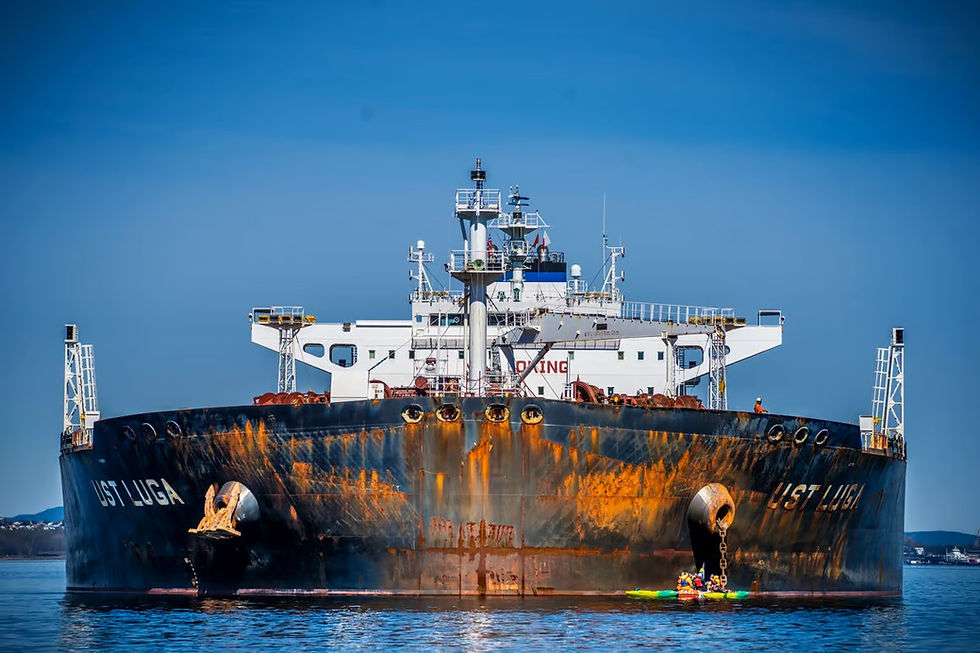
Since Russia’s full-scale invasion of Ukraine in 2022, Moscow has assembled hundreds of aging oil tankers under opaque ownership and multiple flags to circumvent sanctions and maintain vital export revenues. These vessels regularly disable tracking systems and use deceptive flagging to operate with minimal regulatory oversight. Wikipedia
Moran Security and Ex-Wagner Personnel

Moran Security Group is a Russian private security firm with documented ties to the military and intelligence community. U.S. sanctions in 2024 targeted Moran for providing armed security services to state enterprises. Intelligence reporting now confirms that Moran personnel are placed aboard multiple shadow fleet tankers. Many of these individuals are former members or affiliates of the Wagner Group or other Russian private military companies, bringing combat and security expertise to their roles. caliber.az
On shadow fleet vessels, Moran personnel are frequently the only Russians on board, embedded among multinational merchant crews. Their assignments appear to include monitoring foreign captains, enforcing compliance with Kremlin directives, and collecting intelligence, including photographic documentation of European military installations. caliber.az
Boracay: A Case Study

A pivotal example is the tanker Boracay — a vessel that has repeatedly changed names, flags, and registrations. Sanctioned by Western authorities and investigated by French officials, Boracay exemplifies the dual-use role of shadow fleet tankers.

In September, two Russian nationals with security backgrounds (one identified by Ukrainian intelligence as a former Russian police officer with Wagner ties) boarded the ship in Primorsk.

Their presence coincided with reported drone sightings near Danish airspace and closures of civilian infrastructure, though direct operational links remain under investigation. Later, French forces boarded the vessel off Saint-Nazaire as part of a probe into its registration and activities. europeantimes.org+1
Espionage and Hybrid Operations
Open sources have signaled that these embedded security operatives are not passive guards. On at least one voyage, Moran personnel photographed European military installations from the deck of a tanker — a classic indication of covert reconnaissance activity rather than mere shipboard security. caliber.az
The broader pattern aligns with hybrid warfare doctrine: using ostensibly commercial platforms to perform state interests without overt military deployment, complicating attribution and legal counter-measures.
Strategic Implications
The integration of ex-Wagner security operatives into Russia’s shadow fleet challenges traditional maritime norms and raises multiple concerns for European and NATO security:
Maritime domain awareness gaps: Hybrid crews with security mandates may collect intelligence near strategic chokepoints and critical infrastructure.
Ambiguous threat profile: The mix of commercial and security roles complicates legal responses and increases risk of escalation.
Proliferation of dual-use vessels: The Boracay case illustrates how sanctioned ships can be vectors for both sanctions evasion and covert influence operations.
Conclusion
Russia’s strategic use of its shadow fleet — enriched with Moran Security personnel, many formerly associated with Wagner Group units — demonstrates a sophisticated blend of economic evasion and clandestine statecraft at sea. Vessels like Boracay are emblematic of this evolving threat, underscoring the need for coordinated maritime security policies among Western allies to counter hybrid tactics that blur the lines between commerce and espionage. caliber.az

Comments