Russian Fleet Reliance Exposed: MT TOLGA Sustains Severomorsk
- Mar 18
- 3 min read
1. Executive Summary
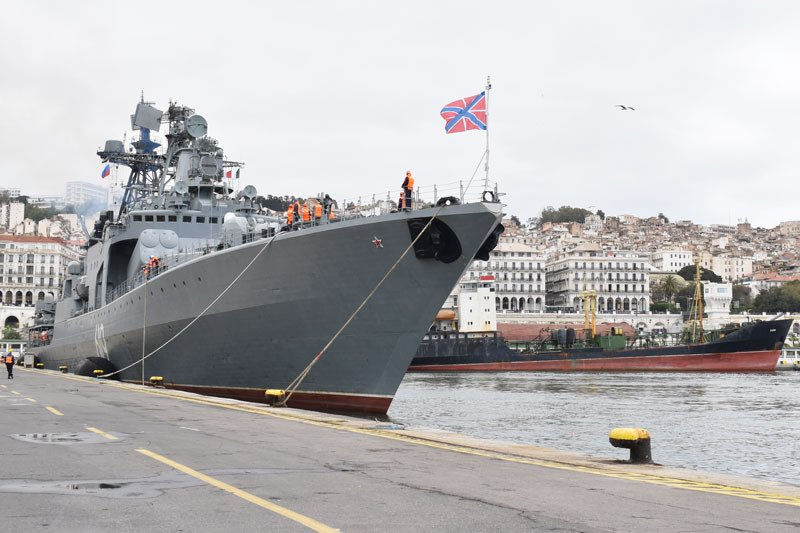
In March 2026, a Russian Northern Fleet surface action group conducted a high-visibility deployment to the Port of Algiers, marking a significant evolution in Moscow’s Mediterranean posture. Amid increasing geopolitical and geographic constraints limiting Russian naval maneuverability beyond the Black Sea, Algeria is emerging as a critical strategic depth and sustainment node in the Western Mediterranean.

A key operational highlight of this deployment was the direct pier-side replenishment of the Severomorsk by the Algerian tanker MT TOLGA, underscoring a growing reliance on host-nation logistics. Notably, this occurred despite the presence of the Russian fleet tanker Kama, which appeared visibly underloaded and in degraded operational condition, raising concerns about the readiness and efficiency of Russia’s auxiliary fleet.

This deployment, conducted under a formal bilateral military cooperation framework, confirms Algeria’s transition from a symbolic partner to a functional logistics hub enabling sustained Russian naval operations.
Key Judgments
Critical Role of MT TOLGA in Sustainment: The close-proximity positioning and refueling operation conducted by MT TOLGA alongside the Severomorsk on March 13 confirms full-spectrum Algerian logistical support. This interaction represents a clear operational dependency, not a contingency measure.

MT TOLGA Degraded Status of Russian Auxiliary Capability (Kama):Visual and contextual indicators suggest that the Kama was significantly underutilized, lightly loaded, and likely not in optimal operational condition, forcing reliance on external (Algerian) supply assets.

Strategic Compensation for Syrian Constraints: The sustained port activity reinforces the assessment that Russia is compensating for reduced reliability or accessibility of Tartus, shifting logistical gravity toward Algiers.
2. Operational Context: Algeria–Russia Naval Alignment
The March 2026 deployment represents a concrete implementation of the bilateral Algeria–Russia military cooperation program, transforming Algiers into a secure logistical anchor point in the Western Mediterranean.
High-level engagements within Algerian naval facilities confirm that Moscow is securing repeatable operational access, enabling persistent deployment cycles near the Strait of Gibraltar and directly contesting NATO maritime dominance.
Order of Battle (OOB): Port of Algiers (March 11–14, 2026)
Asset | Class/Type | Role |
Severomorsk | Udaloy-class Destroyer | ASW / Surface Combatant |
Kama | Fleet Tanker | Logistics & Sustainment |
MT TOLGA | Oil Products Tanker | Host-Nation Support |
3. Maritime Activity Analysis: Logistics and Anomalous Behavior
Between March 11–14, multi-source intelligence (AIS, VISINT, satellite) identified clear indicators of Russian dependence on Algerian logistical infrastructure, alongside anomalies in standard naval sustainment behavior.
Key Findings
Critical Replenishment Event (Primary Indicator):On March 13, AIS and visual confirmation show the MT TOLGA positioned in immediate proximity to the Severomorsk, conducting a direct fuel transfer.This was not a supplementary action—it appears to have been the primary refueling operation, despite the concurrent presence of the Kama.
Kama Condition Assessment (Critical Weakness):The Kama exhibited clear signs of limited operational contribution, including:
Apparent low cargo load
Lack of active participation in replenishment
Positioning inconsistent with a primary fleet support role
This strongly suggests reduced efficiency, possible technical limitations, or logistical shortfalls within the Russian auxiliary fleet.
VISINT Confirmation of Refueling Operations:The Severomorsk was observed flying the Bravo flag, confirming active refueling. Its Ka-27 helicopter remained stowed, indicating sustained readiness during replenishment.

OPSEC Degradation:Refueling operations were conducted in proximity to civilian traffic, including a passenger ferry, highlighting reduced operational security standards and prioritization of logistical necessity over concealment.
Hybrid Sustainment Model:The reliance on MT TOLGA demonstrates a deliberate integration of civilian/commercial assets into military sustainment chains, increasing flexibility but also exposing structural weaknesses.
4. Strategic Assessment: Intent and Force Projection
The operational prioritization of Algiers reflects a strategic pivot toward distributed logistics and external dependency.
The combination of a high-end combatant (Severomorsk) and reliance on host-nation fuel support (MT TOLGA), alongside a degraded auxiliary unit (Kama) highlights a dual reality:
Russia maintains credible combat capability
But faces growing sustainment fragility
This dynamic directly challenges NATO’s assumption of uncontested control over Western Mediterranean SLOCs.
Assessment Highlights
ASW Presence at Strategic Chokepoint:The Severomorsk enables persistent submarine tracking capability near Gibraltar.
Logistical Vulnerability:The inefficiency of the Kama combined with reliance on MT TOLGA suggests that Russian operations are increasingly dependent on external sustainment nodes.
Shift from Tartus to Algiers:Algiers is evolving from an альтернативe port to a primary sustainment hub.
Gray-Zone Structuring:Russia is embedding long-term naval presence under the cover of formal cooperation agreements, enabling rapid escalation without formal basing declarations.
5. Indicators & Warnings (I&W)
Escalation toward a semi-permanent Russian naval footprint in Algiers would be indicated by:
AIS Manipulation:Concealment of auxiliary vessel movements, especially involving assets like the Kama.
Infrastructure Expansion:Development of dedicated POL storage or Russian-use facilities within Algerian bases.
Increased Operational Tempo:Expanded ASW activity by assets deployed from the Severomorsk.

Comments